












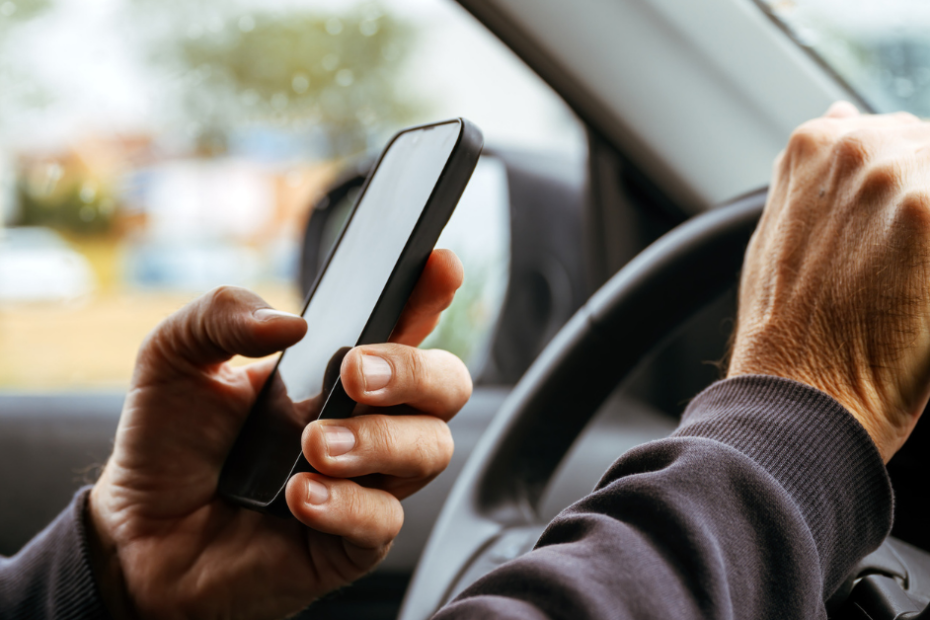
You’re driving to work when your phone buzzes. You know texting and driving is dangerous, but curiosity wins and you glance down “just for a second.” By the time you look up, traffic has stopped and you’re slamming on the brakes. That split second can change your life, someone else’s life, and your finances.
Why Texting and Driving Is So Dangerous
Texting is one of the worst kinds of distraction because it hits you three ways at once:
- Visual: Your eyes leave the road to read or type.
- Manual: At least one hand leaves the wheel.
- Cognitive: Your mind is focused on the conversation, not traffic.
According to the National Highway Traffic Safety Administration (NHTSA), 3,308 people were killed and an estimated 289,000 were injured in crashes involving distracted drivers in 2022. Many of those crashes involved texting and driving.
NHTSA also reports that sending or reading a text typically takes your eyes off the road for about five seconds. At 55 mph, that’s like driving the length of a football field with your eyes closed. In that distance, a car can stop short, a pedestrian can step out, or traffic can shift in front of you.
Younger drivers face extra risk. Teens and young adults use their phones more, often underestimate danger, and have less experience reacting to sudden problems on the road. That combination makes a serious crash more likely when the phone comes out.
Legal and Financial Consequences in California
In California, texting and driving isn’t just risky—it’s illegal. State law bans holding and operating a handheld phone while driving. That includes texting, scrolling social media, or tapping through apps behind the wheel.
Key points under current California law:
- All drivers are prohibited from using a handheld phone while driving.
- Texting, emailing, or using apps in your hand is not allowed—even at stoplights or in heavy traffic.
- Drivers under 18 cannot use a phone at all while driving, even hands free, except to call emergency services.
A first ticket carries a relatively small base fine, but court fees and assessments push the real cost much higher. A second or later offense within 36 months can also add a point to your driving record. Enough points in a short period can lead to a suspension.
If you cause a crash while texting and driving, you could face:
- Higher fines and additional charges, depending on the damage and injuries
- Civil liability for medical bills, lost wages, and pain and suffering
- Possible license suspension and long-term consequences on your record
Those legal and financial hits usually cost far more than any monthly phone bill.
How Texting and Driving Affects Your Insurance
From an insurer’s point of view, texting and driving is a strong sign of higher risk. That risk shows up in what you pay.
A texting-while-driving ticket can:
- Show up on your driving record and be rated as a moving violation if it leads to points
- Push your premium higher at renewal, sometimes for several years
- Limit your options if multiple violations label you as a high-risk driver
If you cause an at-fault crash while distracted, the impact is even bigger. At-fault accidents are one of the main reasons auto rates jump. One serious crash can trigger:
- A large claim payment for the other driver’s injuries and vehicle damage
- Potential payouts for your own vehicle, depending on your coverage
- Significant premium increases, especially if there are injuries involved
Insurers also look at patterns. Several distracted driving incidents over a few years can move you into a higher-risk category and make affordable coverage harder to find.
Simple Ways to Break the Habit
If checking your phone in the car has become automatic, you can still change the habit with a little planning:
- Set your navigation and playlist before you put the car in gear.
- Turn on “Do Not Disturb While Driving” or a similar mode so notifications stay silent.
- Put your phone out of reach—like in the glove box or back seat—so you’re not tempted.
- Let passengers handle texts, calls, and navigation for you.
- If you truly need to respond, pull over to a safe, legal spot and park first.
Parents can also make a big difference by modeling this behavior. If your teen sees you answer texts at stoplights, they’re more likely to do the same when they start driving.
Protect Yourself, Others, and Your Budget
The next time your phone lights up while you’re driving, remember what is really at risk. A few seconds of texting and driving can lead to injuries, lawsuits, tickets, and years of higher insurance costs. No message is worth that trade off.
Choosing to stay focused behind the wheel protects the people you share the road with and helps keep your insurance more affordable. If you’re worried about how a ticket or accident might affect your current policy—or you just want to be sure you’re getting a fair rate for how you actually drive—AIS can help.
AIS Insurance Specialists can review your driving record, compare quotes from multiple carriers, and look for discounts that reward safe driving habits. To review your coverage or get a personalized quote, give AIS a call at (888) 772-4247.
The information in this article is obtained from various sources and offered for educational purposes only. Furthermore, it should not replace the advice of a qualified professional. The definitions, terms, and coverage in a given policy may be different than those suggested here. No warranty or appropriateness for a specific purpose is expressed or implied.