The first chilly morning of fall rolls around, you start the car, and there it is: a little yellow light on the dashboard that looks like a flat tire with an exclamation point. Nothing felt off when you parked last night, so it’s fair to wonder what changed.
The short answer is that the temperature did. Cold weather is one of the most common reasons the tire pressure light pops on, and it doesn’t always mean you have a leak. Here’s why it happens, what to do about it, and how it connects to your car insurance.
Why Does the Tire Pressure Light Come On When It Gets Cold?
Air takes up less space when it’s cold. As temperatures drop, the air molecules inside your tires move more slowly and push less against the tire walls, which lowers the pressure reading. In fact, tire pressure can decrease about 1 psi for every 10-degree drop in temperature.
That adds up faster than most people expect. If a warm afternoon of 75 degrees is followed by a 45-degree morning, your tires could lose around 3 psi overnight without a single drop of air escaping. If your tires were already running a little low, that small seasonal dip can be enough to push them past the point where the light turns on. It’s also why the light often shows up during the first cold snap of the year, when your tires haven’t had time to be topped off for the new season.
What Does the Tire Pressure Light Actually Mean?
That light is part of your car’s tire pressure monitoring system, or TPMS, which tells you when one or more tires are underinflated. Federal safety rules require the system to alert drivers when a tire is 25 percent or more below the vehicle manufacturer’s recommended pressure, according to the National Highway Traffic Safety Administration.
In plain terms, if your car’s recommended pressure is 35 psi, the light is designed to come on once a tire drops to roughly 26 psi. So by the time you see it, your tires are already running noticeably low, which is why it’s worth taking seriously even if the cause is just the weather.
Why Does the Light Sometimes Turn Off by Itself?
If your light comes on when you start the car and disappears after a few minutes of driving, you’re not imagining things. Driving warms up your tires and the air inside them, which raises the pressure slightly and can be enough to switch the light off.
That doesn’t mean the problem is solved. The tires are still underinflated compared to where they should be when cold, and the light will likely be back the next chilly morning. A light that comes and goes is a good hint that it’s time to add some air.
What Should I Do When the Tire Pressure Light Comes On?
You don’t need to be a mechanic to handle this one. A quick routine usually does the trick:
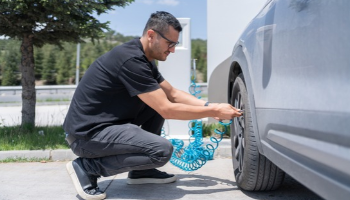
- Check the pressure in all four tires: Use a tire gauge to measure each tire. Important note: one tire can trigger the warning light.
- Find your recommended pressure: It’s usually on a sticker inside the driver’s door, and it’s also in your owner’s manual.
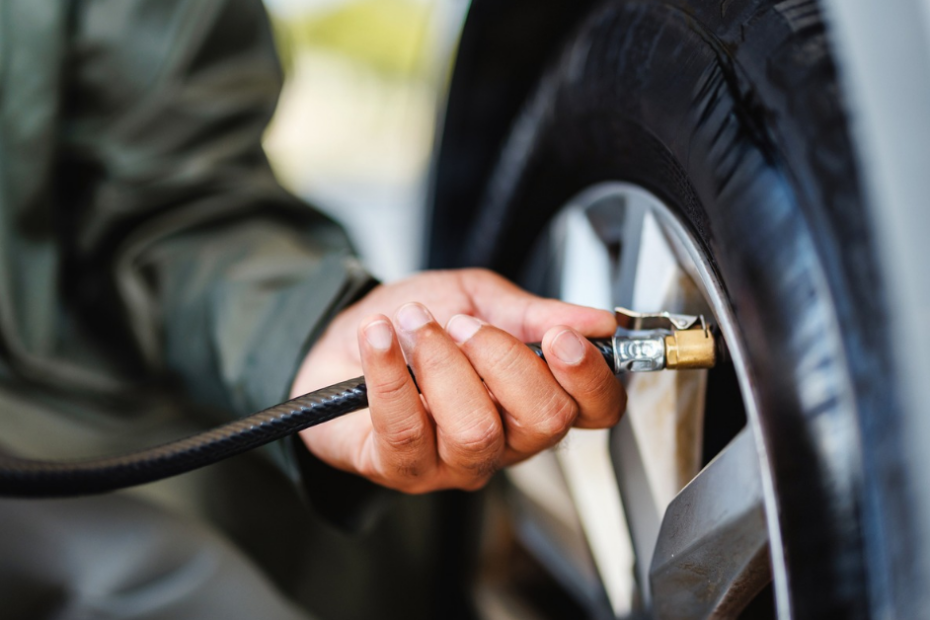
- Add air as needed: Most gas stations have an air compressor that you can use for your tires. Fill each tire to the recommended pressure and check again when you’re done.
- Look for signs of a leak: If one tire keeps losing air, or you notice a nail, a bulge, or visible damage, have it checked by a tire shop instead of just refilling it.
- Pay attention to a blinking light: If the light flashes for about a minute when you start the car and then stays on, that usually points to a problem with the monitoring system itself rather than low air. Your owner’s manual or a service shop can help from there.
How Do I Check My Tire Pressure the Right Way?
Timing matters more than you might think. It’s a good habit to check your tire pressure at least once a month, typically first thing in the morning before you drive since warm tires give a less accurate reading. It’s especially worth doing in the colder months, since pressure keeps dropping as the temperature does.
A quick monthly check also helps you catch slow leaks early. Some tire shops may even check your pressure and add air for you if you’d rather not do it yourself.
Is It Safe to Keep Driving With the Light On?
For a short trip to the nearest air pump, usually yes, but it’s not something to put off for days. Underinflated tires can hurt your handling, wear out faster, and reduce your gas mileage. They can also make a tough situation worse on the road. Plus, a severely underinflated tire can lead to a blowout if you hit a pothole, which could leave you stranded or cause an accident.
If a tire looks visibly flat, the car pulls to one side, or the steering feels off, pull over somewhere safe instead of driving on it.
Does Car Insurance Have Anything to Do With Tire Pressure?
Not directly, but there’s a connection worth knowing. A low tire on its own isn’t an insured event, and routine tire upkeep like adding air, rotating, and replacing worn tires is generally a maintenance cost rather than something your auto policy pays for. Most insurers list normal wear and tear among the common exclusions on a policy.
Where insurance comes in is on the “what if” side. Staying up with your tire pressure can help prevent blowouts and accidents, which in turn lowers your chances of needing to file a claim. And if you do end up with a flat tire on the side of the road, roadside assistance is an optional coverage that can send someone to put your spare tire on. Whether your policy includes it depends on the coverages you chose, so it’s worth a quick look before you need it.
Talk to an AIS Auto Insurance Specialist
Not sure what your auto policy covers if a tire goes flat, or whether roadside assistance is part of your plan? AIS Insurance can help. Our specialists can walk you through your current coverage, explain how optional add-ons like roadside assistance work, and see if there’s room to adjust your policy to fit your budget. Call (888) 772-4247 or start a quote online to review your options.
The information in this article is obtained from various sources and offered for educational purposes only. It should not replace the advice of a qualified professional. The definitions, terms, and coverage in a given policy may be different than those suggested here. No warranty or appropriateness for a specific purpose is expressed or implied.