
Few things say “holiday season” in California quite like a road trip to Tahoe or the Sierra for some snow, family time, or a cozy cabin weekend. However, before you go, it’s important to know when you should have chains on hand and what to do if conditions change. In fact, during the winter months, drivers can easily run into chain requirements in California’s mountain areas, so a little prep can save you a big headache.
Thankfully, getting ready doesn’t take long. Here’s how to prep your car and your plans, and how your auto insurance can help if you end up stranded.
Do You Really Need to Carry Chains?
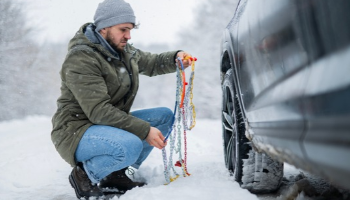
If you’re heading into snow country for your holiday road trip, yes. Caltrans advises always carrying chains that are the right size for your tires and in working order. In fact, even four-wheel and all-wheel drive vehicles must still carry traction devices in chain control areas.
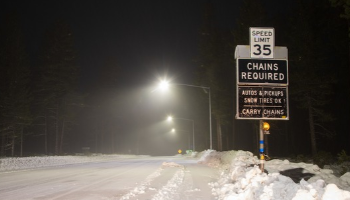
When signs say chains are required, you’ll need to stop and put them on, and the California Highway Patrol can cite and fine you if you don’t. You’ll usually have about a mile between the sign and the checkpoint, so it’s smart to practice installing them at home first. Always be sure to pull completely off the road to the right before you start, and expect a speed limit of 25 or 30 mph once they’re on.
What Should You Check Before You Hit the Road?
Give your car a once-over a few days before you leave on your holiday road trip. Don’t forget to:
- Check your tires. Pressure drops when temperatures do, and Caltrans recommends at least 6/32 inch of tread for driving in snow.
- Test your battery, brakes, wipers, and defroster, and top off your washer fluid.
- Pack an emergency kit with a flashlight, blankets, water, snacks, gloves, an ice scraper, a shovel, and sand or kitty litter.
- Slip a spare key in your pocket. Caltrans notes some drivers have locked themselves out while putting on chains.
From there, start with a full tank or a full charge, give yourself extra time, and check conditions on Caltrans QuickMap or at (800) 427-7623 before you go.
What If You Get Stuck or Break Down on Your Holiday Road Trip?
Even well-planned trips hit snags, like a dead battery, a flat in the cold, or keys locked in the car. If you’re stalled in wintry weather, NHTSA advises you stay with your car, put bright markers on the antenna or windows, and if you need to run the engine for warmth, clear snow from the exhaust pipe and run it only sporadically to avoid carbon monoxide.
Once you’re safe and settled, the next step is getting help on the way, and that’s where roadside assistance can come in handy. It’s typically an optional add-on for non-accident problems.
Mercury’s roadside assistance, for example, covers things like towing, flat tire changes, and emergency fuel or fluid delivery. Towing limits come in $75 (about 15 miles), $500 (about 100 miles), and $1,000 (about 200 miles) options, so a higher limit may be worth a look if you’re heading far from home. You may still pay for things like fuel or replacement keys, and details vary by carrier and policy.
Talk to an AIS Insurance Specialist
Whether you’re chasing snow or just driving across the state for Thanksgiving dinner, it helps to know your coverage before you leave on a holiday road trip. Roadside assistance is built for breakdowns, not accidents, so it’s also worth making sure your overall auto coverage fits your travel plans. An AIS Insurance Specialist can review your auto policy, explain how roadside assistance and towing limits work, and help you find the right fit. Call (888) 772-4247 or visit AIS Insurance to review your options.
The information in this article is obtained from various sources and offered for educational purposes only. It should not replace the advice of a qualified professional. The definitions, terms, and coverage in a given policy may be different than those suggested here. No warranty or appropriateness for a specific purpose is expressed or implied.